Reverse engineering is a useful process that allows engineers and designers to analyse existing components or products to understand their design and functionality. With CNC machines, reverse engineering has become more accessible and efficient, enabling manufacturers to recreate or modify parts with precision and accuracy.
How are CNC machines used effectively for reverse engineering
Reverse engineering is the process of deconstructing and analysing an existing object or component to extract design information, dimensions, and specifications. This information can then be used to recreate the object or make improvements or modifications to its design. Reverse engineering is commonly used in various industries, like automotive, aerospace, electronics, and consumer goods, to replicate or enhance existing products, troubleshoot issues, or develop compatible components.
CNC machines play an important role in reverse engineering by providing precise and automated means to replicate or modify existing parts. These versatile machines use computer-controlled movements to precisely cut, mill, drill, and shape materials according to digital design specifications. By leveraging CNC technology, manufacturers can recreate complex geometries, achieve tight tolerances, and produce high-quality replicas of original components.
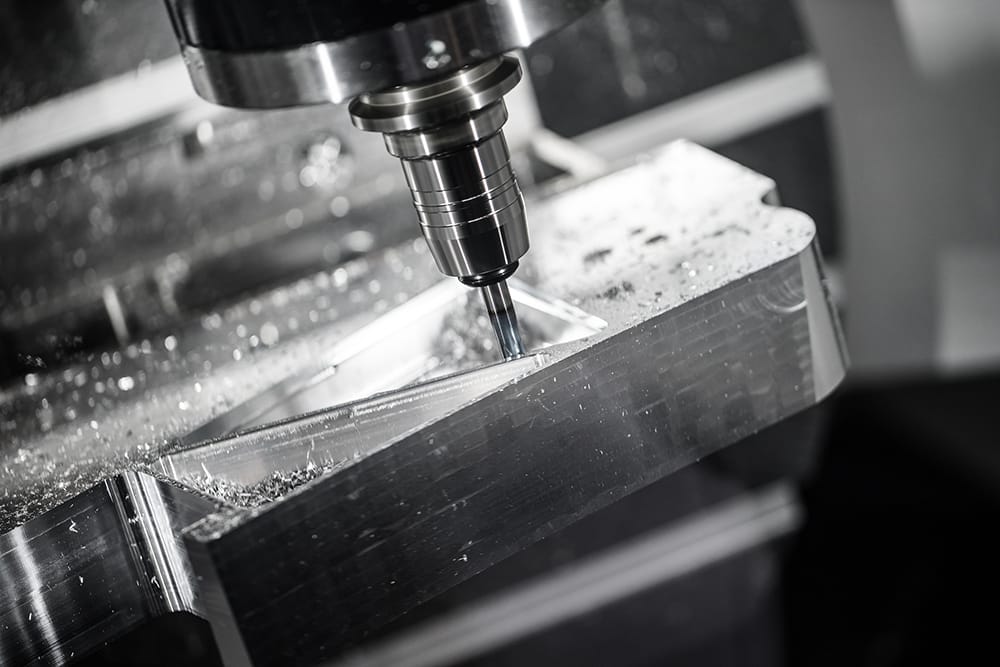
These are the steps in reverse engineering with CNC machines
Initial Assessment
The reverse engineering process begins with a thorough assessment of the original part or component. This involves inspecting the object to identify its key features, dimensions, and material properties. It is essential to document and capture detailed measurements and data using techniques such as 3D scanning, coordinate measuring machines (CMM), or manual measurements with callipers and rulers.
Digital Modelling
Once the necessary data has been collected, it is converted into a digital format using specialised software such as Computer-Aided Design (CAD) or 3D modelling software. This digital model serves as the basis for creating tool-paths and generating instructions for the CNC machine to replicate the part accurately.
CNC Programming
With the digital model in hand, the next step is to program the CNC machine to execute the machining operations required to reproduce the part. This involves creating tool-paths that specify the cutting, milling, drilling, and finishing operations needed to achieve the desired dimensions and surface finishes. CNC programming software allows engineers to simulate and optimise tool-paths to ensure efficient and accurate machining.
Material Selection and Setup
Once the CNC program is finalised, the appropriate material is selected for machining. The material should match or closely resemble the properties of the original part to ensure compatibility and performance. The material is then securely mounted or fixtured on the CNC machine’s worktable, ready for machining.
Machining Operations
With the setup complete, the CNC machine begins executing the programmed tool-paths to machine the part. The machine precisely cuts away excess material, mills intricate features, drills holes, and applies surface finishes according to the digital model’s specifications. Throughout the machining process, operators monitor the machine’s performance and make any necessary adjustments to ensure accuracy and quality.
Quality Assurance
Once machining is complete, the newly fabricated part is inspected and compared against the original part to verify dimensional accuracy and quality. This may involve using measuring tools, such as callipers, micrometers, or CMM, to ensure that the part meets the required specifications. Any discrepancies or deviations are addressed and corrected as needed.
Reverse engineering with CNC machines offers manufacturers a powerful tool for recreating, modifying, or improving existing parts and components. By following a systematic approach that includes initial assessment, digital modelling, CNC programming, material selection, machining operations, and quality assurance, engineers and designers can effectively reverse engineer parts with precision and accuracy. With advancements in CNC technology and software, the possibilities for reverse engineering are endless, enabling manufacturers to innovate, adapt, and stay competitive in today’s rapidly evolving marketplace.
At BSP Engineering, we offer reverse engineering service for analysing and understanding the design and functionality of a product or system you need.